Family: Technology
Gas cooktops
Heat comes from an open burner fed with natural or liquefied petroleum gas.
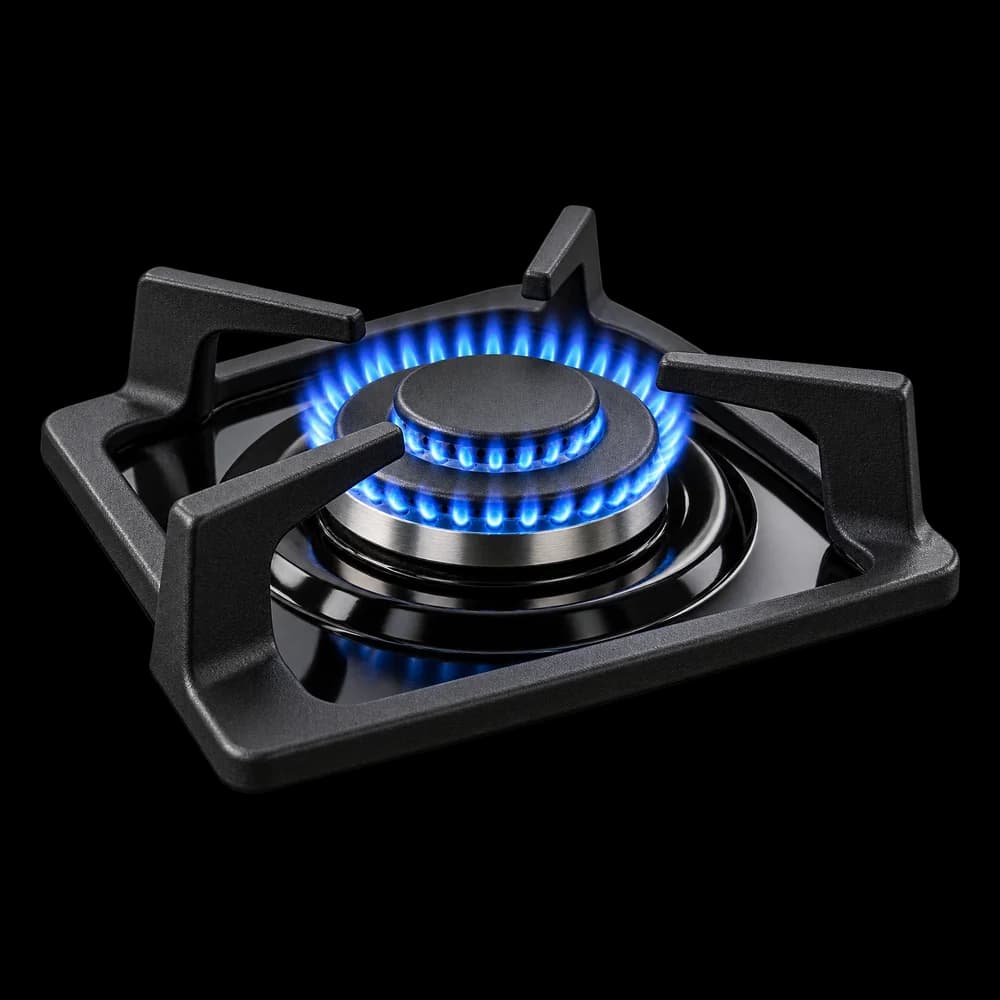
The images are illustrations generated by a neural network, not photographs of the measured sample.
Overview
A gas cooktop produces heat by burning a fuel, typically natural gas or liquefied petroleum gas, at an open burner. A regulated flow of gas mixes with air and is ignited, and the visible flame transfers energy to the pan mainly by convection and radiation. Heat output is adjusted by changing the gas flow with a valve, and the flame responds essentially instantly. Because combustion occurs in the room, the process consumes oxygen and releases exhaust gases and water vapour. Burner design, gas pressure and pan position all affect how much energy reaches the food. Actual performance varies with installation, fuel quality and maintenance.
Properties
Production method
- How heat is produced
Gas burns in the burner and the flame heats the outside of the pan
More detail
The burner burns gas and the heat reaches the vessel through the flame: the highest heat transfer occurs when the flame impinges on the heated surface, so the burner-to-pan distance and the shape of the flame directly affect the result. What is heated is the outside of the vessel, and with it the air and the surface around it. The energy balance of a domestic gas stove and ways to improve it are a research field of their own.
Quality indicators
- Energy efficiency
Lower fraction of fuel energy reaches the pan; much lost as hot gas
What is nearby
Common comparisons
Sources and evidence
Sources by kind of evidence
AGENCYAgency2
REVIEWSystematic review2
Reader reviews
Reviews are published after moderation.
No published reviews yet.