Family: Food
Brown unmilled rice
Grain with the bran: more manganese, selenium and zinc, and also more arsenic and cadmium.
The images are illustrations generated by a neural network, not photographs of the measured sample.
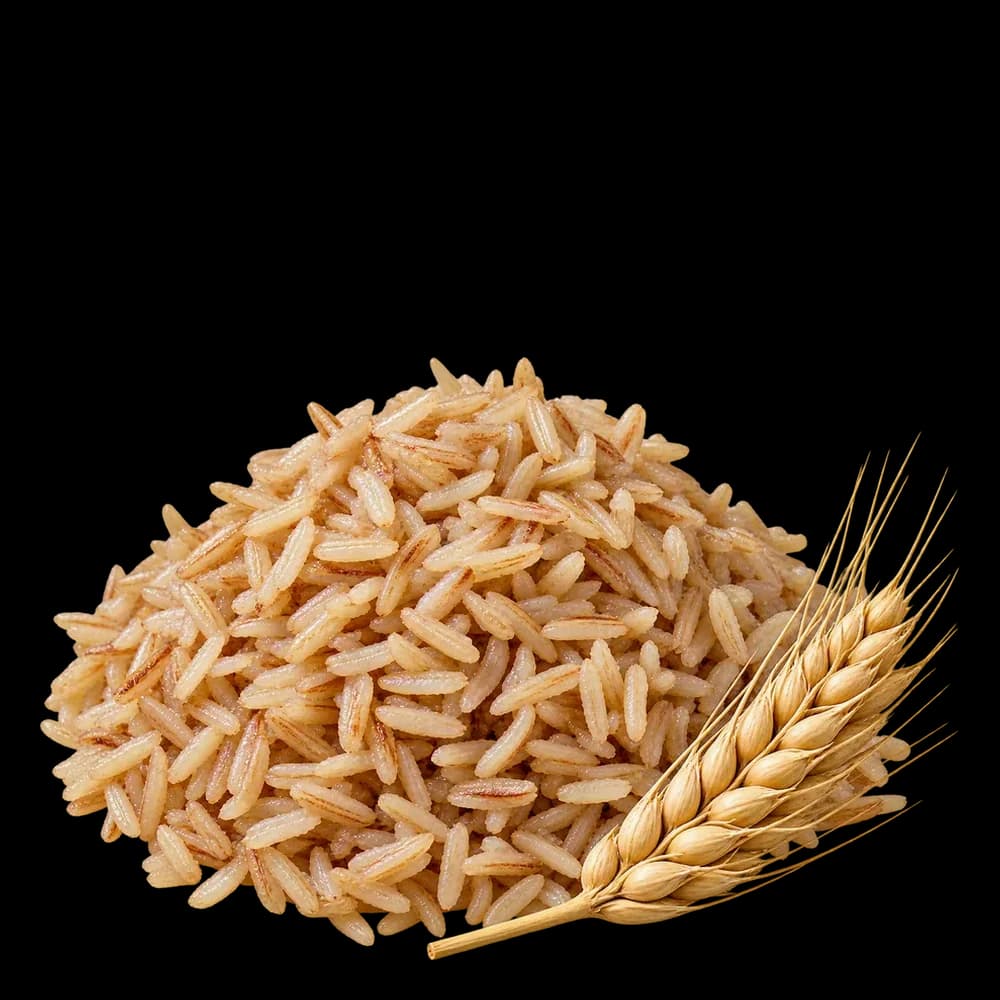
Overview
In brown rice the bran stays, and with it both the nutrients and what accumulates alongside them. By the measurement of 446 grains, unmilled grain carries markedly more manganese, nickel, copper, selenium and zinc, and at the same time more arsenic, cadmium and chromium. On the long-term side the picture differs from white rice but is not its opposite: the meta-analysis notes that studies on brown rice conflict, and could not be pooled into a single figure.
Properties
Production method
- What milling removes
The bran stays: both the nutrients and what accumulates with them
More detail
Unmilled grain keeps its bran, and with it the manganese, nickel, copper, selenium and zinc that milled rice has markedly less of. Arsenic, cadmium and chromium stay too: in the measurement their contents in bran and in milled grain are linearly related.
Quality indicators
- State of the evidence
There is less data, and it conflicts
More detail
For brown rice the meta-analysis had three estimates against fifteen for white, and the authors call the studies conflicting. That does not mean brown rice is safer or more dangerous: it means there is not yet enough to say about it with the same confidence.
Qualitative characteristics
What is nearby
Common comparisons
Related categories
Sources and evidence
Sources by kind of evidence
REVIEWSystematic review2
Reader reviews
Reviews are published after moderation.
No published reviews yet.