Family: Household chemicals & care
Powered toothbrush
Removes more plaque than a manual brush; in an abrasion experiment it also removes more dentin.
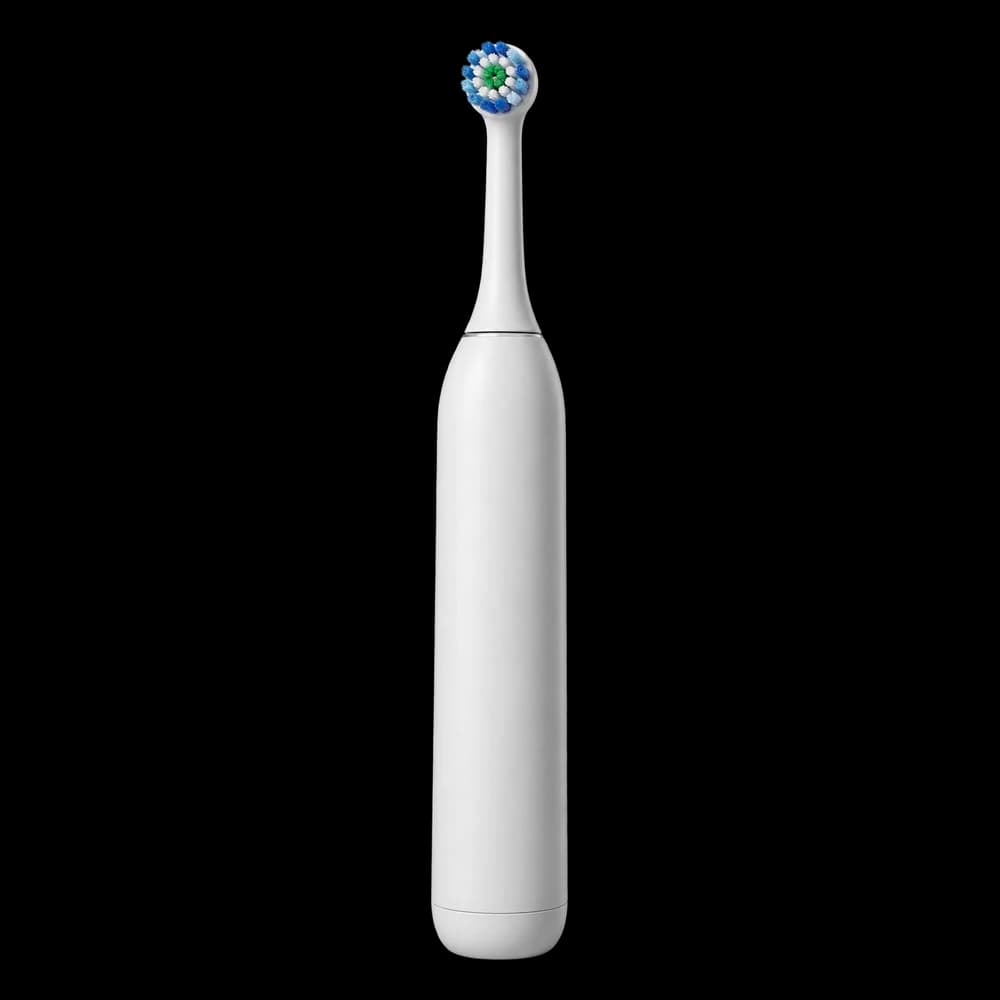
The images are illustrations generated by a neural network, not photographs of the measured sample.
Overview
A meta-analysis of 51 trials in 4,624 participants gives the size of the advantage: an 11% reduction in plaque in the short term and 21% in the long term compared with a manual brush, plus less gingival inflammation. A 2019 review confirms the direction on a single brushing. There is a trade-off that reviews of plaque removal do not cover: in a machine experiment on dentin samples at equal force, powered brushes removed markedly more surface than a manual one — 21.03 and 15.71 micrometres against 6.13 over a simulated eight and a half years.
Properties
Quality indicators
- State of the evidence
Moderate quality, high heterogeneity, unclear risk of bias in most trials
More detail
The review names its own limits: moderate quality of evidence, high heterogeneity between trials (I² of 83% and 86%), five of fifty-six trials at low risk of bias and forty-six at unclear risk. The review is from 2014 and the platform marks it stale; the 2019 work measures a single brushing rather than a habit.
Health-related indicators
- What the research shows
Plaque lower by 11% in the short term and 21% in the long term
What is nearby
Sources and evidence
Sources by kind of evidence
REVIEWSystematic review2
STUDYPeer-reviewed1
Reader reviews
Reviews are published after moderation.
No published reviews yet.