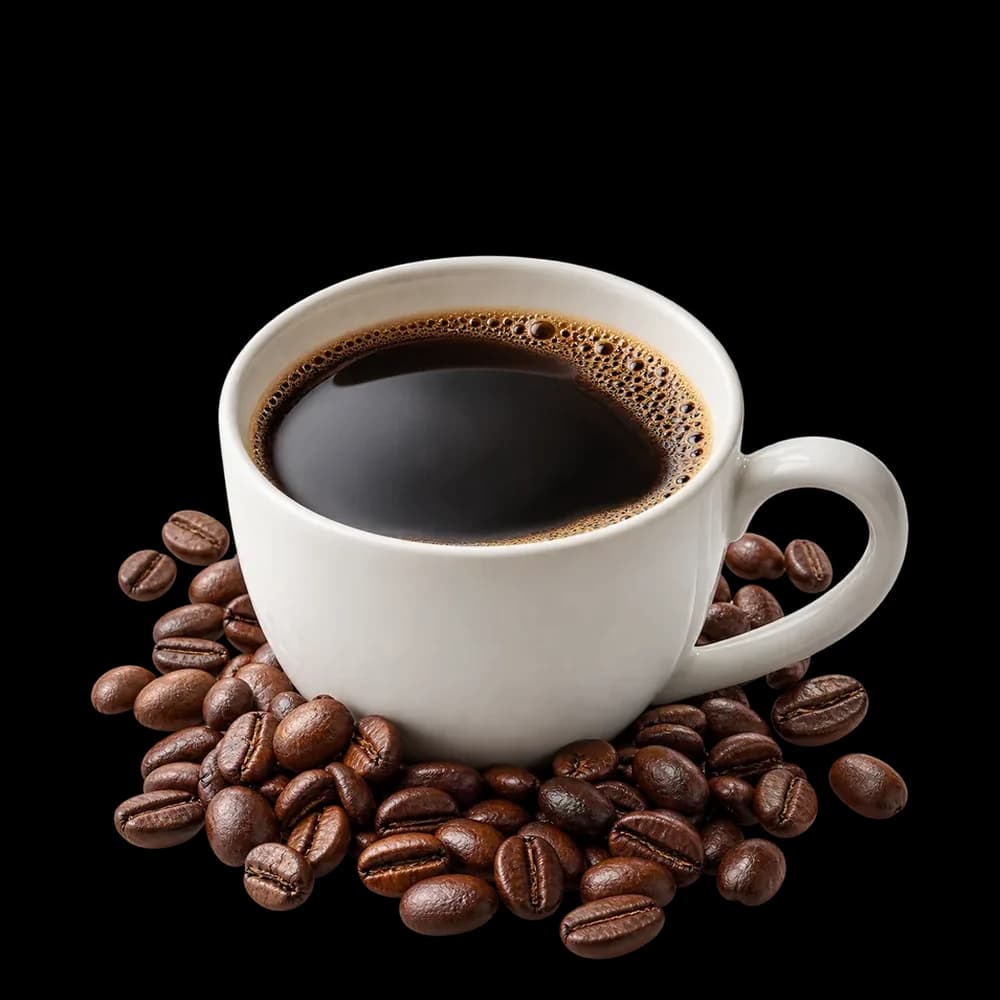
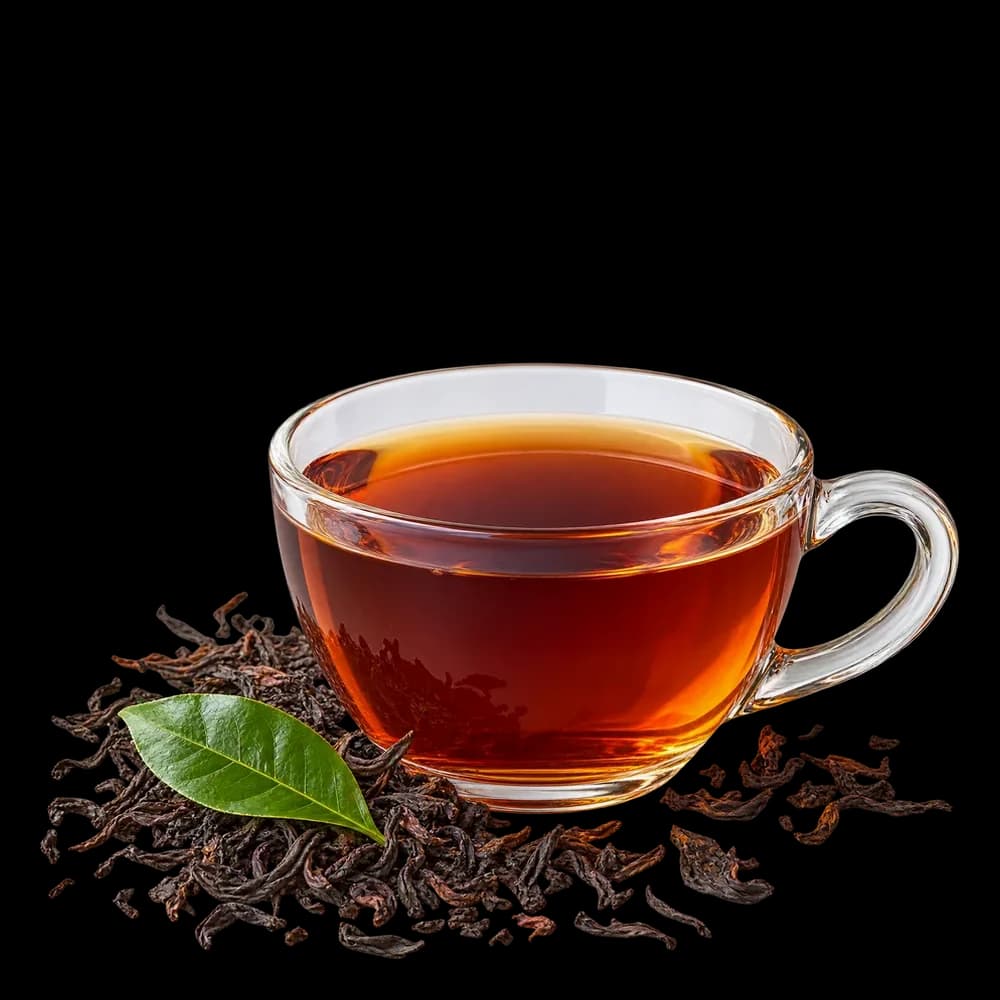
| Proximates6 |
|---|
| Energy The amount of energy the body obtains from a serving of food. It comes from protein, fat and carbohydrate and is measured in kilocalories.Read more → | ккал | Coffee1ккал | Black tea1ккал | Differenceequalequal |
|---|
| Water | г | Coffee99.4г | Black tea99.7г | Difference↑+0.3г+0.3 %more at Black tea, +0.3 % |
|---|
| Protein The body’s main building material: muscle, skin, enzymes and many hormones are made of protein. The body breaks dietary protein into amino acids and builds its own from them.Read more → | г | Coffee0.12г | Black tea0г | Difference↓−0.12гnone / presentmore at Coffee, none / present |
|---|
| Total fat All fats in the serving together. Fat supplies energy, carries vitamins A, D, E and K and forms part of every cell membrane; different kinds of fat differ in their health effects.Read more → | г | Coffee0.02г | Black tea0г | Difference↓−0.02гnone / presentmore at Coffee, none / present |
|---|
| Carbohydrate The body’s main source of energy. It covers sugars, starch and dietary fibre; the body breaks them down to glucose, which feeds the cells.Read more → | г | Coffee0г | Black tea0.3г | Difference↑+0.3гnone / presentmore at Black tea, none / present |
|---|
| Ash | г | Coffee0.35г | Black tea0.04г | Difference↓−0.31г−88.6 %more at Coffee, −88.6 % |
|---|
| Minerals10 |
|---|
| Calcium The mineral that bones and teeth are built from. It is also needed for muscle contraction, blood clotting and nerve signalling.Read more → | мг | Coffee2мг | Black tea0мг | Difference↓−2мгnone / presentmore at Coffee, none / present |
|---|
| Iron A mineral in haemoglobin, the protein that carries oxygen through the blood. Its deficiency is the most common nutritional deficiency worldwide.Read more → | мг | Coffee0.01мг | Black tea0.02мг | Difference↑+0.01мг+100 %more at Black tea, +100 % |
|---|
| Magnesium A mineral required by hundreds of enzymes. It takes part in muscle and nerve function, energy production and bone building.Read more → | мг | Coffee3мг | Black tea3мг | Differenceequalequal |
|---|
| Phosphorus A mineral that forms bone tissue together with calcium. It is also part of the molecules that carry energy inside the cell.Read more → | мг | Coffee3мг | Black tea1мг | Difference↓−2мг−66.7 %more at Coffee, −66.7 % |
|---|
| Potassium A mineral that maintains the water balance of cells, muscle function and heart rhythm. It works in tandem with sodium.Read more → | мг | Coffee49мг | Black tea37мг | Difference↓−12мг−24.5 %more at Coffee, −24.5 % |
|---|
| Sodium A mineral that holds fluid in the body and takes part in nerve signalling. Table salt is the main dietary source.Read more → | мг | Coffee2мг | Black tea3мг | Difference↑+1мг+50 %more at Black tea, +50 % |
|---|
| Zinc A mineral needed by the immune system, for wound healing and for taste and smell. It is part of many enzymes.Read more → | мг | Coffee0.02мг | Black tea0.02мг | Differenceequalequal |
|---|
| Copper A mineral involved in iron absorption, nerve function and the formation of connective tissue.Read more → | мг | Coffee0.002мг | Black tea0.01мг | Difference↑+0.008мг+400 %more at Black tea, +400 % |
|---|
| Manganese A mineral found in metabolic enzymes and involved in building bone and connective tissue.Read more → | мг | Coffee0.023мг | Black tea0.219мг | Difference↑+0.196мг+852.17 %more at Black tea, +852.17 % |
|---|
| Fluoride A mineral that strengthens tooth enamel and makes it more resistant to decay. It comes from water and toothpaste.Read more → | мкг | Coffee90.7мкг | Black tea373мкг | Difference↑+282.3мкг+311.25 %more at Black tea, +311.25 % |
|---|
| Vitamins9 |
|---|
| Thiamin (B1) Vitamin B1. It is needed for the body to draw energy from carbohydrate and for nervous-system function.Read more → | мг | Coffee0.014мг | Black tea0мг | Difference↓−0.014мгnone / presentmore at Coffee, none / present |
|---|
| Riboflavin (B2) Vitamin B2. It takes part in energy production in cells and in the metabolism of other B vitamins.Read more → | мг | Coffee0.076мг | Black tea0.014мг | Difference↓−0.062мг−81.6 %more at Coffee, −81.6 % |
|---|
| Niacin (B3) Vitamin B3. It forms part of the coenzymes without which energy reactions do not proceed in nearly every tissue.Read more → | мг | Coffee0.191мг | Black tea0мг | Difference↓−0.191мгnone / presentmore at Coffee, none / present |
|---|
| Pantothenic acid (B5) Vitamin B5. It forms part of coenzyme A, the substance through which fat, carbohydrate and protein metabolism passes.Read more → | мг | Coffee0.254мг | Black tea0.011мг | Difference↓−0.243мг−95.7 %more at Coffee, −95.7 % |
|---|
| Vitamin B6 Vitamin B6. It is needed for amino-acid metabolism, haemoglobin formation and nervous-system function.Read more → | мг | Coffee0.001мг | Black tea0мг | Difference↓−0.001мгnone / presentmore at Coffee, none / present |
|---|
| Folate, total A B-group vitamin needed for cell division and DNA building. It matters most before and during pregnancy.Read more → | мкг | Coffee2мкг | Black tea5мкг | Difference↑+3мкг+150 %more at Black tea, +150 % |
|---|
| Vitamin E A vitamin that protects the fats of cell membranes from oxidation. It is found in vegetable oils, nuts and seeds.Read more → | мг | Coffee0.01мг | Black tea0мг | Difference↓−0.01мгnone / presentmore at Coffee, none / present |
|---|
| Vitamin K1 (phylloquinone) A vitamin without which blood does not clot: the clotting proteins need it. It also takes part in bone metabolism.Read more → | мкг | Coffee0.1мкг | Black tea0мкг | Difference↓−0.1мкгnone / presentmore at Coffee, none / present |
|---|
| Choline A substance close to the B vitamins. It is part of cell membranes and of acetylcholine, a nerve-signal transmitter.Read more → | мг | Coffee2.6мг | Black tea0.4мг | Difference↓−2.2мг−84.6 %more at Coffee, −84.6 % |
|---|
| Fatty acids3 |
|---|
| Saturated fatty acids Fats whose molecules contain no double bonds. They are common in animal foods; intake above moderate amounts is linked to higher blood cholesterol.Read more → | г | Coffee0.002г | Black tea0.002г | Differenceequalequal |
|---|
| Monounsaturated fatty acids Fats with a single double bond in the molecule. They are abundant in olive oil and nuts; replacing saturated fat with them usually improves blood lipid measures.Read more → | г | Coffee0.015г | Black tea0.001г | Difference↓−0.014г−93.3 %more at Coffee, −93.3 % |
|---|
| Polyunsaturated fatty acids Fats with several double bonds. They include the essential fatty acids the body cannot build itself and obtains only from food.Read more → | г | Coffee0.001г | Black tea0.004г | Difference↑+0.003г+300 %more at Black tea, +300 % |
|---|
| Other2 |
|---|
| Caffeine A natural stimulant of the central nervous system. It occurs in coffee, tea and cocoa and reduces the feeling of drowsiness.Read more → | мг | Coffee40мг | Black tea20мг | Difference↓−20мг−50 %more at Coffee, −50 % |
|---|
| Theobromine | мг | Coffee0мг | Black tea2мг | Difference↑+2мгnone / presentmore at Black tea, none / present |
|---|