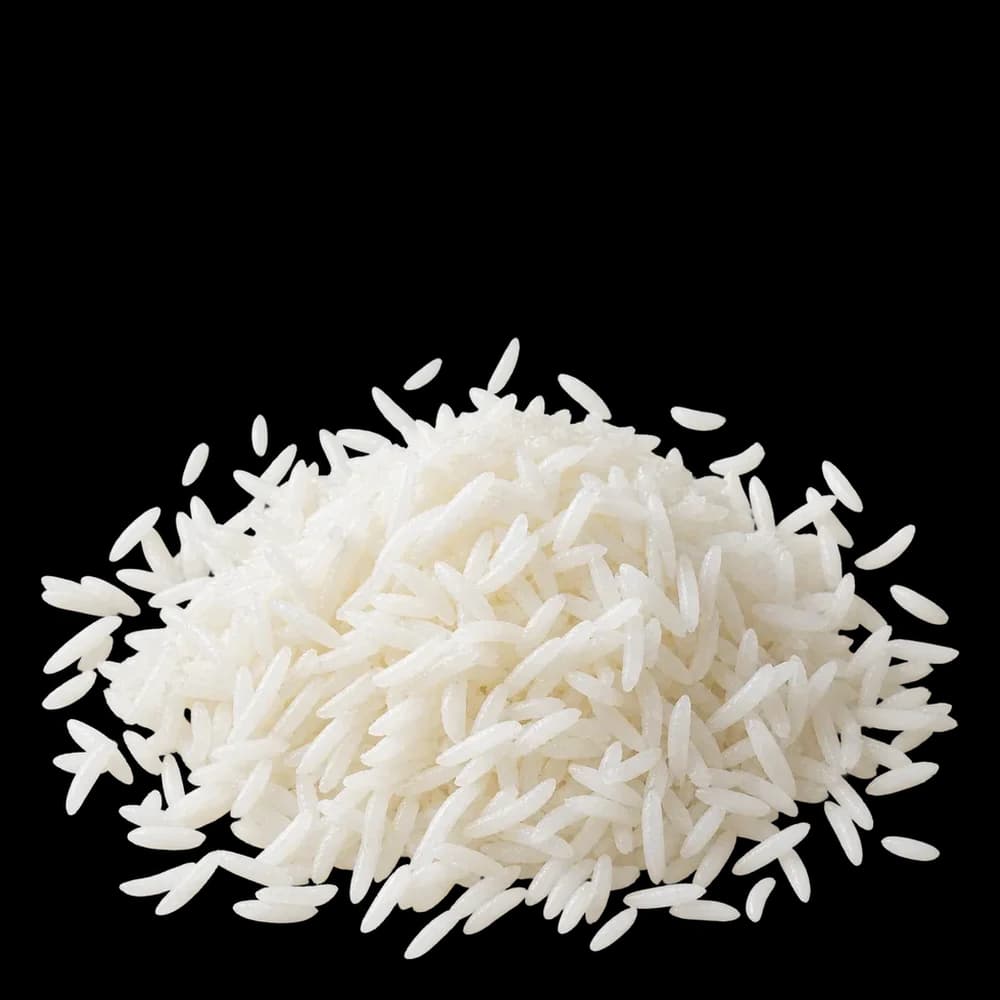
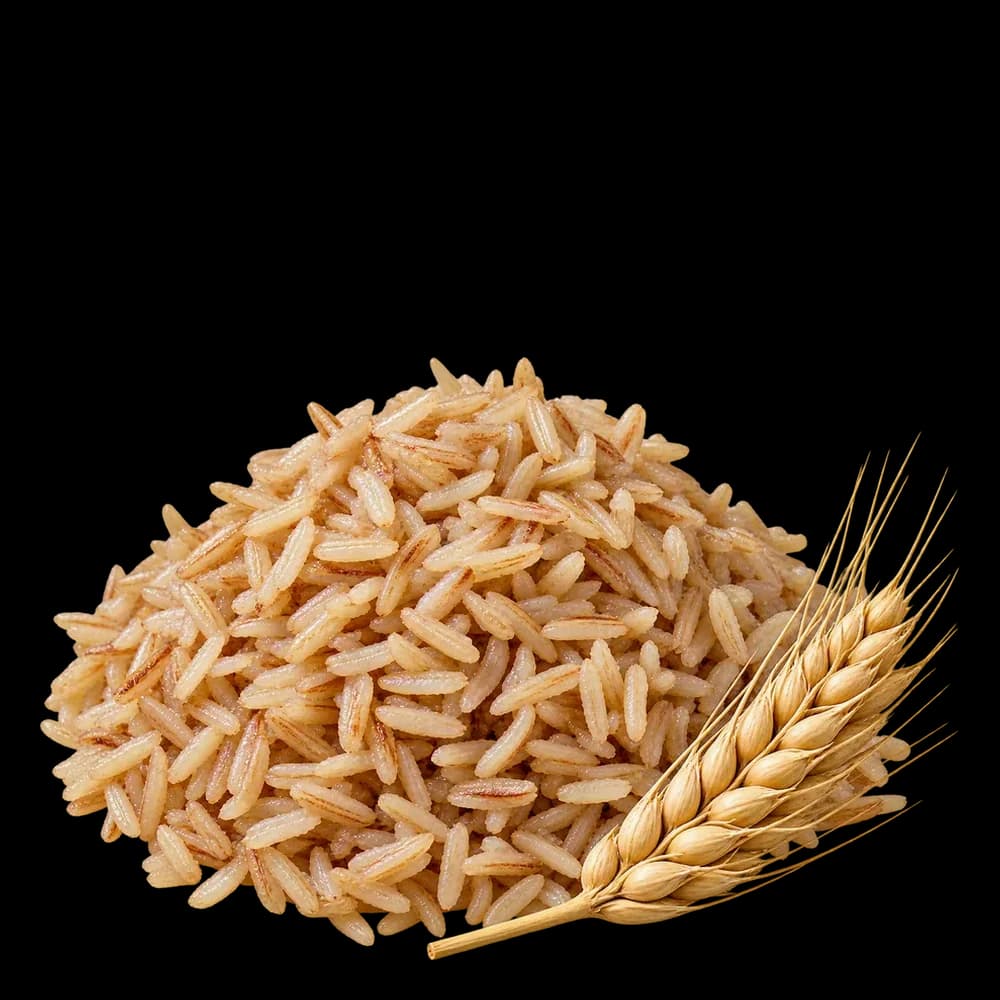
| Proximates8 |
|---|
| Energy The amount of energy the body obtains from a serving of food. It comes from protein, fat and carbohydrate and is measured in kilocalories.Read more → | ккал | White rice130ккал | Brown rice123ккал | Difference↓−7ккал−5.4 %more at White rice, −5.4 % |
|---|
| Water | г | White rice68.4г | Brown rice70.3г | Difference↑+1.9г+2.8 %more at Brown rice, +2.8 % |
|---|
| Protein The body’s main building material: muscle, skin, enzymes and many hormones are made of protein. The body breaks dietary protein into amino acids and builds its own from them.Read more → | г | White rice2.69г | Brown rice2.74г | Difference↑+0.05г+1.9 %more at Brown rice, +1.9 % |
|---|
| Total fat All fats in the serving together. Fat supplies energy, carries vitamins A, D, E and K and forms part of every cell membrane; different kinds of fat differ in their health effects.Read more → | г | White rice0.28г | Brown rice0.97г | Difference↑+0.69г+246.43 %more at Brown rice, +246.43 % |
|---|
| Carbohydrate The body’s main source of energy. It covers sugars, starch and dietary fibre; the body breaks them down to glucose, which feeds the cells.Read more → | г | White rice28.2г | Brown rice25.6г | Difference↓−2.6г−9.2 %more at White rice, −9.2 % |
|---|
| Dietary fibre Carbohydrates the body does not digest. They add bulk to intestinal contents, slow sugar absorption and feed the gut bacteria.Read more → | г | White rice0.4г | Brown rice1.6г | Difference↑+1.2г+300 %more at Brown rice, +300 % |
|---|
| Total sugars All simple carbohydrates in the serving together — both the food’s own sugars and any added. They do not differ in composition, only in origin.Read more → | г | White rice0.05г | Brown rice0.24г | Difference↑+0.19г+380 %more at Brown rice, +380 % |
|---|
| Ash | г | White rice0.41г | Brown rice0.44г | Difference↑+0.03г+7.3 %more at Brown rice, +7.3 % |
|---|
| Minerals10 |
|---|
| Calcium The mineral that bones and teeth are built from. It is also needed for muscle contraction, blood clotting and nerve signalling.Read more → | мг | White rice10мг | Brown rice3мг | Difference↓−7мг−70 %more at White rice, −70 % |
|---|
| Iron A mineral in haemoglobin, the protein that carries oxygen through the blood. Its deficiency is the most common nutritional deficiency worldwide.Read more → | мг | White rice1.2мг | Brown rice0.56мг | Difference↓−0.64мг−53.3 %more at White rice, −53.3 % |
|---|
| Magnesium A mineral required by hundreds of enzymes. It takes part in muscle and nerve function, energy production and bone building.Read more → | мг | White rice12мг | Brown rice39мг | Difference↑+27мг+225 %more at Brown rice, +225 % |
|---|
| Phosphorus A mineral that forms bone tissue together with calcium. It is also part of the molecules that carry energy inside the cell.Read more → | мг | White rice43мг | Brown rice103мг | Difference↑+60мг+139.53 %more at Brown rice, +139.53 % |
|---|
| Potassium A mineral that maintains the water balance of cells, muscle function and heart rhythm. It works in tandem with sodium.Read more → | мг | White rice35мг | Brown rice86мг | Difference↑+51мг+145.71 %more at Brown rice, +145.71 % |
|---|
| Sodium A mineral that holds fluid in the body and takes part in nerve signalling. Table salt is the main dietary source.Read more → | мг | White rice1мг | Brown rice4мг | Difference↑+3мг+300 %more at Brown rice, +300 % |
|---|
| Zinc A mineral needed by the immune system, for wound healing and for taste and smell. It is part of many enzymes.Read more → | мг | White rice0.49мг | Brown rice0.71мг | Difference↑+0.22мг+44.9 %more at Brown rice, +44.9 % |
|---|
| Copper A mineral involved in iron absorption, nerve function and the formation of connective tissue.Read more → | мг | White rice0.069мг | Brown rice0.106мг | Difference↑+0.037мг+53.6 %more at Brown rice, +53.6 % |
|---|
| Manganese A mineral found in metabolic enzymes and involved in building bone and connective tissue.Read more → | мг | White rice0.472мг | Brown rice0.974мг | Difference↑+0.502мг+106.36 %more at Brown rice, +106.36 % |
|---|
| Selenium A mineral found in enzymes that protect cells from damage. It is also needed for thyroid function.Read more → | мкг | White rice7.5мкг | Brown rice5.8мкг | Difference↓−1.7мкг−22.7 %more at White rice, −22.7 % |
|---|
| Vitamins9 |
|---|
| Thiamin (B1) Vitamin B1. It is needed for the body to draw energy from carbohydrate and for nervous-system function.Read more → | мг | White rice0.163мг | Brown rice0.178мг | Difference↑+0.015мг+9.2 %more at Brown rice, +9.2 % |
|---|
| Riboflavin (B2) Vitamin B2. It takes part in energy production in cells and in the metabolism of other B vitamins.Read more → | мг | White rice0.013мг | Brown rice0.069мг | Difference↑+0.056мг+430.77 %more at Brown rice, +430.77 % |
|---|
| Niacin (B3) Vitamin B3. It forms part of the coenzymes without which energy reactions do not proceed in nearly every tissue.Read more → | мг | White rice1.48мг | Brown rice2.56мг | Difference↑+1.08мг+73 %more at Brown rice, +73 % |
|---|
| Pantothenic acid (B5) Vitamin B5. It forms part of coenzyme A, the substance through which fat, carbohydrate and protein metabolism passes.Read more → | мг | White rice0.39мг | Brown rice0.38мг | Difference↓−0.01мг−2.6 %more at White rice, −2.6 % |
|---|
| Vitamin B6 Vitamin B6. It is needed for amino-acid metabolism, haemoglobin formation and nervous-system function.Read more → | мг | White rice0.093мг | Brown rice0.123мг | Difference↑+0.03мг+32.3 %more at Brown rice, +32.3 % |
|---|
| Folate, total A B-group vitamin needed for cell division and DNA building. It matters most before and during pregnancy.Read more → | мкг | White rice58мкг | Brown rice9мкг | Difference↓−49мкг−84.5 %more at White rice, −84.5 % |
|---|
| Vitamin E A vitamin that protects the fats of cell membranes from oxidation. It is found in vegetable oils, nuts and seeds.Read more → | мг | White rice0.04мг | Brown rice0.17мг | Difference↑+0.13мг+325 %more at Brown rice, +325 % |
|---|
| Vitamin K1 (phylloquinone) A vitamin without which blood does not clot: the clotting proteins need it. It also takes part in bone metabolism.Read more → | мкг | White rice0мкг | Brown rice0.2мкг | Difference↑+0.2мкгnone / presentmore at Brown rice, none / present |
|---|
| Choline A substance close to the B vitamins. It is part of cell membranes and of acetylcholine, a nerve-signal transmitter.Read more → | мг | White rice2.1мг | Brown rice9.2мг | Difference↑+7.1мг+338.1 %more at Brown rice, +338.1 % |
|---|
| Fatty acids3 |
|---|
| Saturated fatty acids Fats whose molecules contain no double bonds. They are common in animal foods; intake above moderate amounts is linked to higher blood cholesterol.Read more → | г | White rice0.077г | Brown rice0.26г | Difference↑+0.183г+237.66 %more at Brown rice, +237.66 % |
|---|
| Monounsaturated fatty acids Fats with a single double bond in the molecule. They are abundant in olive oil and nuts; replacing saturated fat with them usually improves blood lipid measures.Read more → | г | White rice0.088г | Brown rice0.369г | Difference↑+0.281г+319.32 %more at Brown rice, +319.32 % |
|---|
| Polyunsaturated fatty acids Fats with several double bonds. They include the essential fatty acids the body cannot build itself and obtains only from food.Read more → | г | White rice0.076г | Brown rice0.366г | Difference↑+0.29г+381.58 %more at Brown rice, +381.58 % |
|---|