Family: Beverages
Plant-based milk
Water-based drinks from soy, oat, almond and other plants, often with added nutrients.
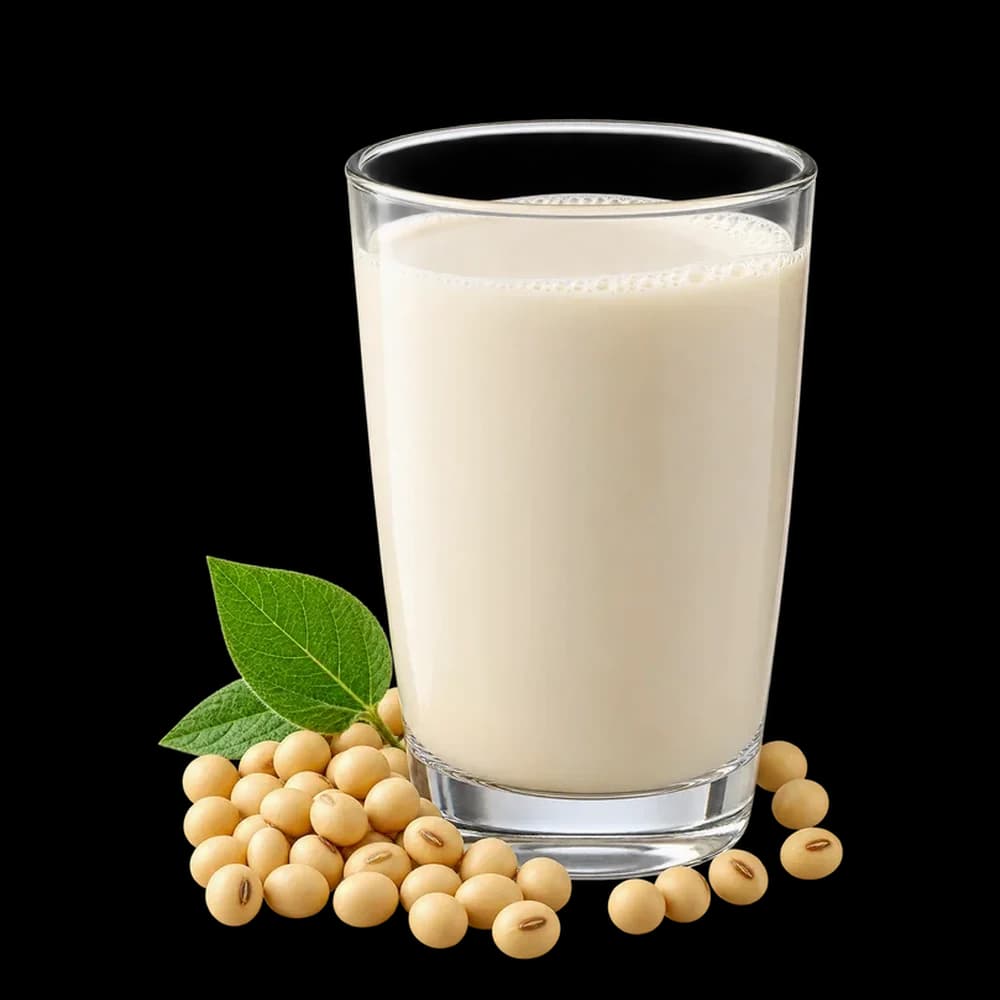
The images are illustrations generated by a neural network, not photographs of the measured sample.
Overview
Plant-based milks are water-based drinks made from soy, oat, almond, rice, coconut, pea or other plants, then strained and often blended with oils, stabilizers and added nutrients. They are not a single product: composition varies enormously between and within categories, between brands, and between sweetened and unsweetened versions. Naturally they contain little of the calcium, iodine or vitamin B12 found in animal milk unless these are added. USDA and Harvard describe them as a diverse group whose nutritional value depends heavily on the base plant and the specific formulation rather than on any shared standard, so generalizations across the whole category are unreliable.
Sources and evidence: [1]
Properties
Production method
- How the drink is made
The raw material is disrupted and extracted with water, or an emulsion is assembled; nutrients are often added
More detail
Plant-based drinks follow two main production routes: disruption of the plant material — nuts, seeds or legumes — to form an aqueous suspension of oil bodies, or the formation of an oil-in-water emulsion by homogenising oil, water and emulsifiers. Hence the variability of composition: it is set not only by the raw material but by the chosen route. Fortification is a separate production step: plant-based diets are low in vitamin B12, vitamin D, calcium and ω-3 fatty acids, and these are added deliberately.
Quality indicators
- How quality is judged
No shared indicator has formed for the group: even the final composition is not established
What is nearby
Common comparisons
Sources and evidence
Sources by kind of evidence
AGENCYAgency1
Reader reviews
Reviews are published after moderation.
No published reviews yet.